Text Information
Editions
Provenience Map
| Loading cuneiform… |
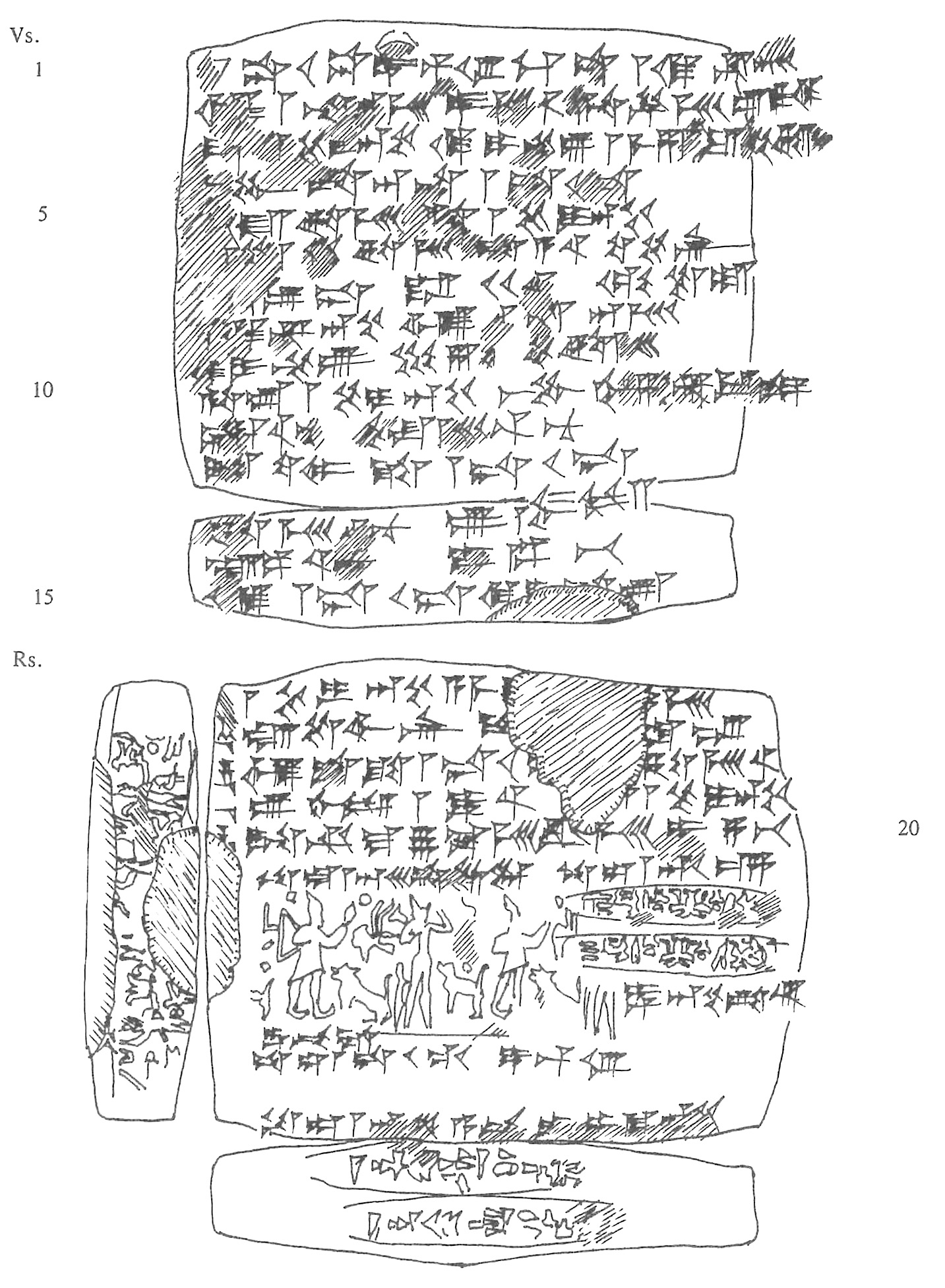
— Handcopy by Akio Tsukimoto
ll. 1–4 Dūdu son of Mašru, with Kiri-Dagan and Abdi-ili, his sons, stood as amēlūtu o[f] Šeʾi-Dagan in lieu of 105 shekels and 40 (grains) of silver.
ll. 4–6 Now Dūdu returned 40 shekels of silver to Šeʾi-Dagan from that silver.
ll. 7–11 (Thus), Dūdu released himself, (but) Kiri-Dagan and Abdi-ili, in place of 65 ‹shekels› and 40 (grains) of silver, remained in the house of Šeʾi-Dagan; so did Ṣāriptu, their mother ‹and› their sisters.
ll. 12–14 On the day when Dūdu will pay their silver, he will break their tablet.
ll. 15–17 And Dūdu, while residing in the house of Šeʾi-Dagan, was released [from 9 months of w]ork and w[e]nt away.
ll. 18–20 And on the ‹day› when Dūd[u] will pay his silver, he shall give one of his sons [t]o Šeʾi-Dagan and he (the son) will perform the work for 9 months.
General notes
Secondary Literature
- Study Westbrook, R. (2001). Social Justice and Creative Jurisprudence in Late Bronze Age Syria. Journal of the Economic and Social History of the Orient, 44, 36–41. — 34
- Study Justel, J. J. (2014). Mujeres y derecho en el Próximo Oriente Antiguo. La presencia de mujeres en los textos jurídicos cuneiformes del segundo y primer milenios a. C.. — 203
- Study Viano, M. (2018). Quando il lavoro non è quantificabile: il caso dei contratti amēlūtu da Emar. In M. Vallerani (Ed.), Valore delle cose e valore delle persone. Dall’Antichità all’Età moderna (pp. 43–68). — 53-54
- Study Viano, M. (2023). Debt and Indebtedness at Emar. De Gruyter. — 384-387